
Planting
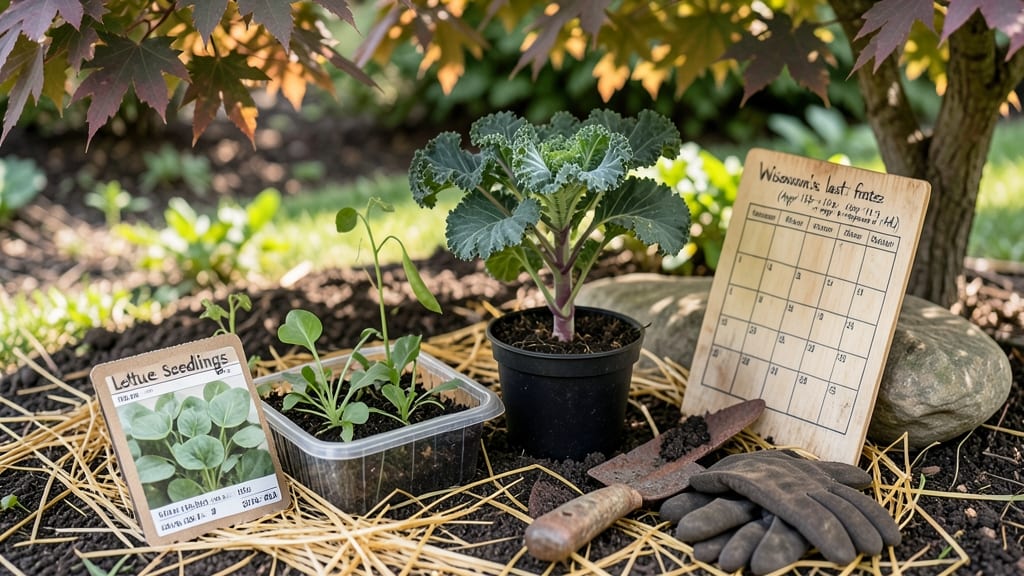
Planting a garden in Wisconsin at the right time ensures your 🌱 seedlings thrive instead of shiver under frost.
Wisconsin’s unpredictable frost dates can turn a gardener’s excitement into frustration—plant too early, and your seedlings freeze; too late, and you miss the growing season entirely. But timing your garden right isn’t just about dates—it’s about matching your plants to your county’s microclimate.
Southern Wisconsin’s warmer zones (like Dane or Milwaukee counties) can start warm-season crops like tomatoes by late April, while northern areas (like Chippewa or Douglas) may need to wait until early June.
Cool-season crops like spinach or peas, however, can go in as soon as the soil thaws—sometimes even in March.
In this guide, you’ll find exact last-frost dates by county, a breakdown of the best planting windows for vegetables and flowers, and tips to adjust for Wisconsin’s wild weather. No more guessing—just a foolproof schedule to get your garden growing strong.
Wisconsin last frost dates by county: a county-by-county planting timeline
Wisconsin’s 72 counties create a patchwork of planting zones, where a 5-day difference in frost dates can mean the difference between a thriving garden and a failed crop.
The state spans USDA Zones 3b to 5b, with northern counties like Bayfield averaging last frosts in May 25, while southern counties like Walworth often see frost-free soil by April 25.
These variations mean your tomato seedlings in Door County may need to wait 3 weeks longer than those in Grant County.
Understanding your county’s last frost date is the first step, but it’s only half the battle. You’ll also need to account for soil temperature, which typically lags behind air temperature by 1-2 weeks.
For example, while Milwaukee County might see its last frost on May 10, the soil may not warm enough for pepper transplants until May 25. This timing ensures your plants avoid chilling injury and establish strong root systems before summer heat arrives.
Below is a county-by-county breakdown of Wisconsin’s average last frost dates, organized by region. Use this as your guide for warm-season crops like tomatoes, peppers, and corn, as well as cool-season crops such as spinach, peas, and lettuce.
For precision, I recommend checking your local Cooperative Extension office or using the Midwestern Regional Climate Center’s frost maps for real-time updates.
| Region | Counties | Avg. Last Frost | Warm-Season Planting Window | Cool-Season Planting Window |
|---|---|---|---|---|
| Northern | Bayfield, Ashland, Iron, Sawyer | May 25 – June 5 | June 15 – July 1 | April 1 – April 20 (under cover) |
| Northwest | Chippewa, Clark, Dunn, Eau Claire | May 10 – May 20 | May 25 – June 10 | March 20 – April 10 (under cover) |
| Central | Columbia, Dane, Green, Sauk | May 1 – May 10 | May 15 – May 30 | March 15 – April 5 (under cover) |
| Southeast | Jefferson, Kenosha, Racine, Walworth | April 25 – May 5 | May 1 – May 15 | March 1 – March 20 (under cover) |
| Southwest | Grant, Iowa, La Crosse, Vernon | April 20 – May 1 | April 25 – May 10 | March 10 – March 25 (under cover) |
For warm-season crops, aim to plant after your county’s last frost date, but wait an additional 2 weeks for soil to reach 60°F—critical for tomatoes, peppers, and corn.
In Milwaukee County, this means holding off on tomato transplants until May 15, while Eau Claire County gardeners can start on May 25. Use black plastic mulch to warm soil faster if you’re eager to get started.
Cool-season crops like spinach, peas, and
Best planting schedule by vegetable type in Wisconsin’s climate zones
Wisconsin’s 5 climate zones (ranging from Zone 4A in the north to Zone 5B in the south) create distinct planting windows for your garden. Understanding these zones helps you choose the right transplant dates and cold-hardy varieties to maximize your harvest.
For example, Zone 4A gardeners in northern counties like Ashland should start cool-season crops 2-3 weeks earlier than those in Zone 5B areas like Dane County.
While last frost dates vary, a general rule is to plant cool-season crops like spinach and peas as soon as the soil is workable (around mid-April in the south, late May in the north).
Meanwhile, warm-season crops such as tomatoes and peppers need to wait until after the last frost—typically late May to early June—when soil temperatures reach 50°F or higher.
- Zone 4A (North): Start cool crops indoors by March 15. Transplant kale and cabbage after May 15. Plant warm crops after June 1.
- Zone 4B (Central-North): Plant spinach and lettuce outdoors by April 15. Transplant tomatoes after May 20. Succession plant beans every 2 weeks until July 1.
- Zone 5A (South-Central): Direct-sow radishes by March 20. Transplant peppers after May 1. Extend season with fall crops like broccoli by July 15.
- Zone 5B (Southwest): Plant asparagus crowns in early spring. Transplant eggplants after April 20. Use row covers for late-season greens until October 15.
- Succession Planting Tip: For high-yield crops like lettuce or bush beans, sow new seeds every 2-3 weeks to ensure a continuous harvest.
In Zone 4A, where winters are longer, focus on cold-hardy varieties like Swiss chard and kohlrabi, which tolerate light frosts. Use row covers or cold frames to extend the season for spinach and carrots into early fall.
Meanwhile, Zone 5B gardeners can experiment with longer-season varieties like heirloom tomatoes or butternut squash, which thrive with the region’s warmer summers.
For succession planting, prioritize fast-maturing crops such as radishes (30 days) and bush beans (50 days). In Zone 4B, for example, you can plant 3 successive batches of lettuce between April 15 and June 1, ensuring a steady supply.
Always stagger plantings by 10-14 days to avoid gaps in your harvest.
Don’t forget to account for soil warmth, which directly impacts seed germination. Use a soil thermometer to confirm that warm-season crops like cucumbers (ideal soil temp: 70°F) are planted only when conditions are right.
In Zone 5A, this often means waiting until late May, while Zone 4A may need to delay until early June.
By aligning your planting schedule with Wisconsin’s climate zones and microclimates, you’ll avoid common pitfalls like frost damage or bolting in heat-sensitive crops. Start with cool-season staples, then transition to warm-season favorites as temperatures rise—your garden’s success depends on it! 🌱